

Strategically located
Helsingborg sits at the centre of northern Europe’s most important trade and logistics flows. With direct access to major roads, rail, ferry links and Sweden’s second-largest container port, you’re well connected to both the Nordics and mainland Europe—and to markets far beyond.

A strategic hub for sea, road and rail
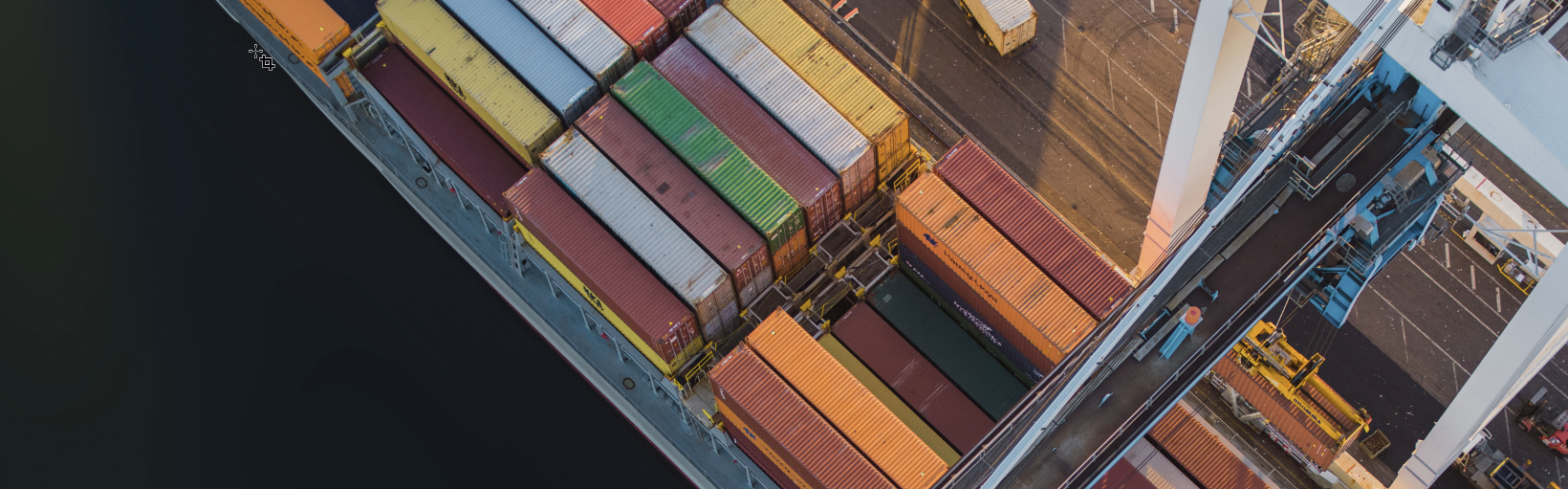
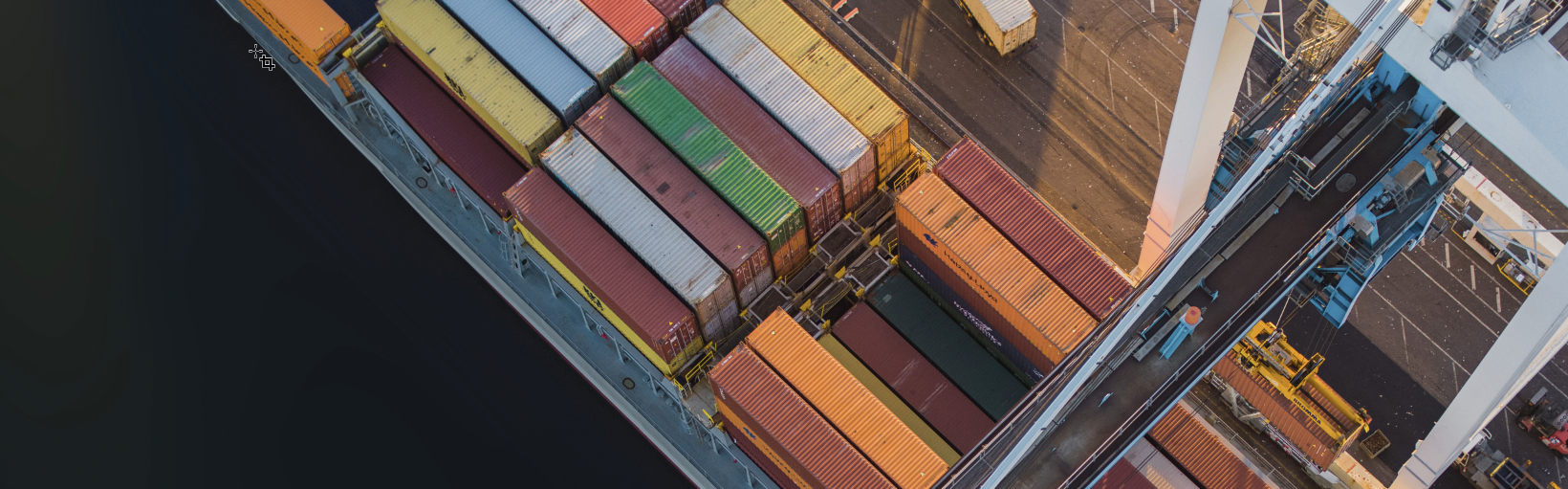
The Port of Helsingborg is one of northern Europe’s key logistics hubs—and a major reason the city is such a strong location for logistics and trade. Sea, road and rail come together in one integrated system, giving businesses fast, reliable access to both Swedish and international markets.
One of Sweden’s largest ferry ports and a specialist in container handling, the port is a central partner for shipping lines, carriers and freight forwarders. It operates seven days a week, all year round, with efficient connections to major European hubs and global markets beyond.
Maritime transport accounts for eight out of ten goods imported into Sweden, and the Port of Helsingborg plays a vital role in keeping those flows moving. From here, goods move quickly across Europe and out into the world. Each year, more than seven million tonnes of cargo are handled using four cranes, around 70 terminal tractors and 48 handling machines. The port is also leading the shift to more sustainable logistics, with Sweden’s first charging station for heavy transport and a target to electrify 75% of its handling equipment.
From 2026, the Port of Helsingborg will be the first in Scandinavia to offer shore power for container vessels. This investment in electrification underlines a commitment to a fossil-free future, and strengthens the port’s appeal to shipping lines with high sustainability ambitions.
Fehmarn Belt—a shorter route to a wider market
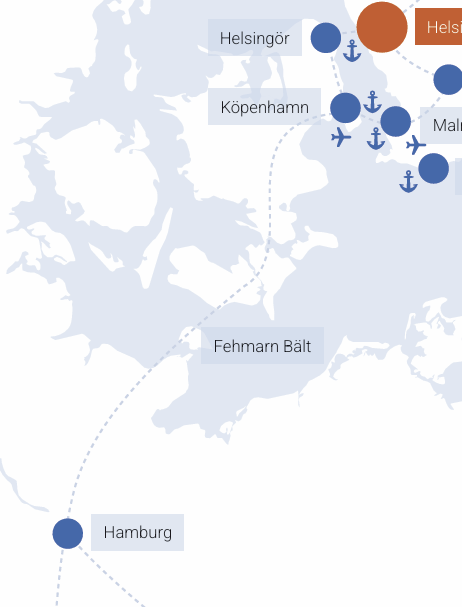
When the Fehmarn Belt tunnel opens in the early 2030s, it will reshape travel, labour markets and freight flows across northern Europe. The new link will significantly improve access to Germany and Central Europe, cutting lead times, reducing transport costs and opening up larger markets. A train journey between Helsingborg and Hamburg will take under four hours, compared with around six today—strengthening export potential and overall competitiveness.
The connection will also create a more integrated and expanded labour market across southern Sweden, Denmark and northern Germany. Improved accessibility makes it easier to attract and retain talent, across both specialist roles and skilled trades, and enables commuting patterns that are not possible today. The wider economic impact is substantial. More efficient transport, lower costs and more reliable flows will strengthen trade and increase opportunities for business growth across the Öresund region.
The Fehmarn Belt tunnel will help shape a new megaregion of around 14 million people and serve as a key link in the green transport corridor between Oslo and Hamburg. For Helsingborg, this means closer connections to mainland Europe, stronger prospects for logistics and trade, and a more competitive position in an increasingly connected European market.
A future fixed link between Helsingborg and Helsingør (HH)
A fixed HH link would create a larger, more integrated labour market in the northern Öresund region, giving companies better access to talent and stronger conditions for growth. Increased mobility, shorter travel times and improved accessibility would make it easier to recruit, expand and establish in the region.
The connection would cut travel time to Copenhagen to around 40 minutes by train—strengthening both business competitiveness and the region’s overall appeal. It would also increase capacity and resilience in the Öresund transport system, supporting significant travel flows—around seven million passengers and more than 1.7 million vehicles each year between Helsingborg and Helsingør. It would also connect labour markets and residential areas not currently served by the Öresund Bridge or existing ferry routes.
From a European perspective, the link would become a key part of the green transport corridor between Oslo and Hamburg, and of the STRING megaregion—further strengthening northern Europe’s connectivity and competitiveness.
There is broad agreement within the Greater Copenhagen partnership that the link should move forward as soon as possible. As of 2025, studies have focused on capacity, redundancy and resilience—the next step is to determine the most suitable route.
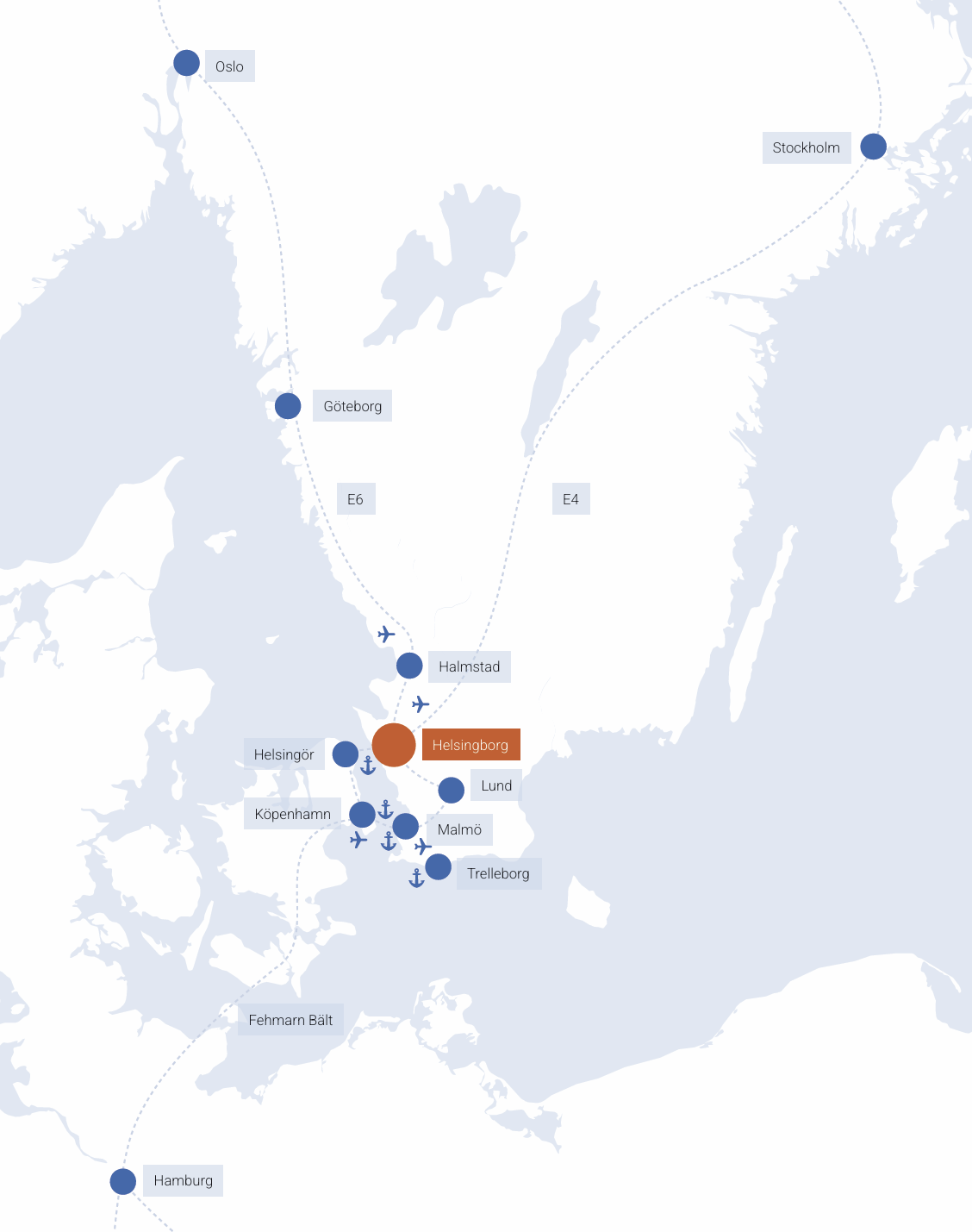
Helsingborg has ten regional rail stations—more than any other city in Sweden—and development is focused around them to support sustainable growth. Strong commuting links connect the city to Ängelholm, Höganäs, Landskrona, Bjuv, Åstorp, Malmö and Lund, with around 1.3 million people within a 50-minute journey.
Four airports are within an hour’s reach: Copenhagen—largest in the Nordics—Ängelholm/Helsingborg,
Malmö and Halmstad.
Inpendling har ökat med 33 procent och utpendling har ökat med 44 procent sedan 2010.
The ferry between Helsingborg and Helsingør is an important link for long-distance road transport and provides access to an attractive labour market on the Danish side.
Around 40,000 people pass through Helsingborg Central Station each day, where ferry, bus and rail services connect.
For 40% of Swedes, Copenhagen Airport is the nearest major international airport.